ChatGPT will build you a meal plan on demand — but can it do the job as well as a trained dietitian? A new study in the Journal of Nutrition put exactly that to the test: three dietitians and ChatGPT each built meal plans for people with obesity, raised blood lipids, high blood pressure or type 2 diabetes, all measured against official guidelines. The result is awkward for both sides. ChatGPT came surprisingly close, and it still trips over things a good dietitian does in their sleep. And one key question the freely readable abstract leaves wide open: which model was actually doing the work?
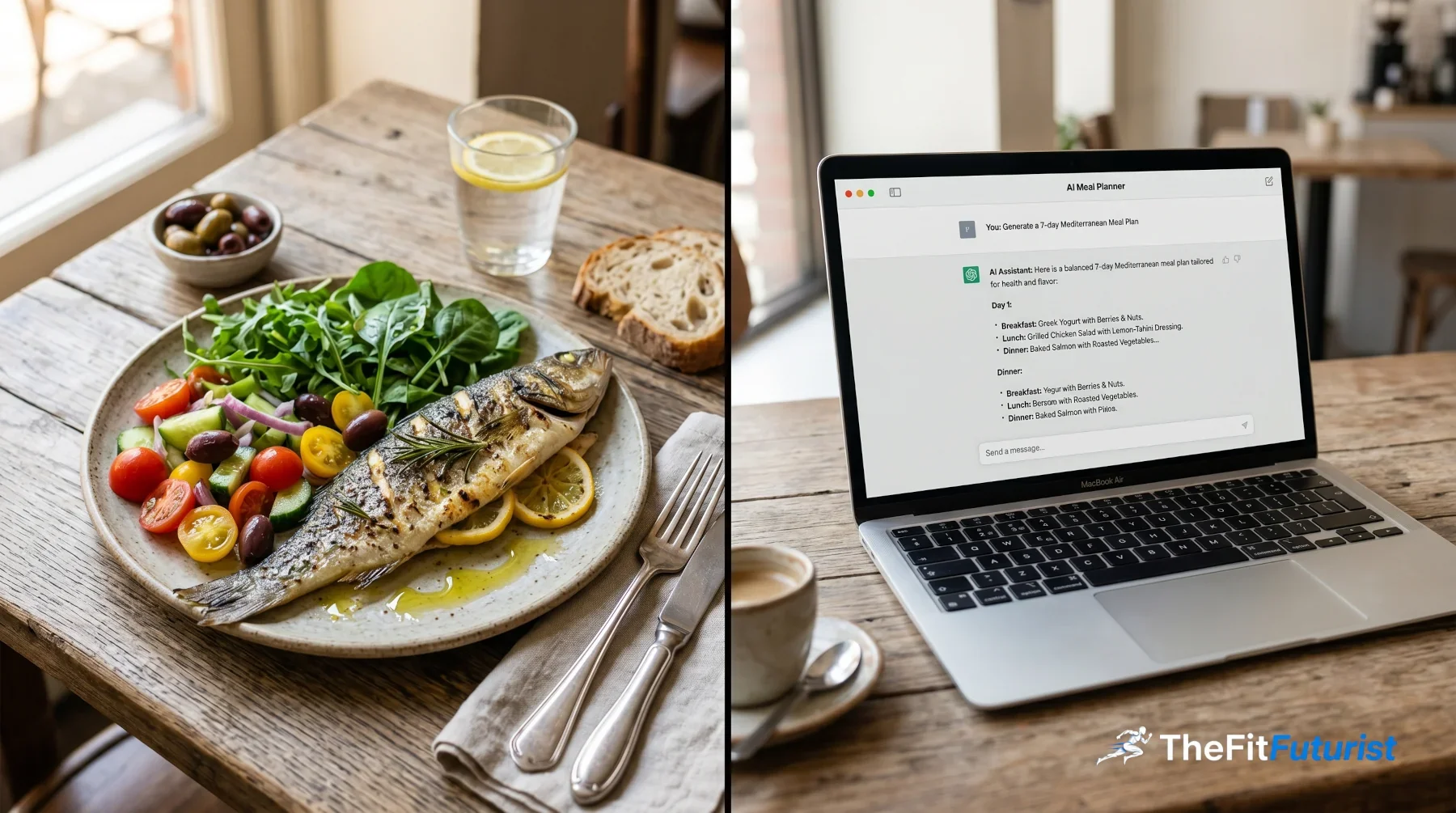
AI-generated image
ChatGPT vs. Dietitian: What the New Study Reveals
 Christopher Klenk7 min read
At a glance
ChatGPT hit 55–83 percent on adherence to official nutrition guidelines, the human dietitians 50–100 percent — close to neck and neck. But ChatGPT never recommended the Mediterranean diet and handed men systematically higher-calorie plans than women. Vitamin D came up short in every plan, the pros included. The abstract doesn't name the model used — the study's timing points to GPT-4o or GPT-5, with the exact version locked in the paywalled full text.
Stay on top of AI training & analysis? One click — and Google shows you my articles first.
Add as a preferred source on GoogleWhat the study did — and what's missing from the abstract
Three dietitians and ChatGPT built plans for the same three patient cases — but the freely available abstract never says which model ran them. The cases were stacked realistically: obesity plus raised blood lipids, then high blood pressure on top, then type 2 diabetes on top of that. The prompts were refined over several rounds, the nutrient content of each plan was analysed with dedicated software and checked against the official recommendations. On top of that, the researchers tested whether ChatGPT produces different plans for men and women and across four ethnic groups.
That's a clean setup. What's missing is the model name in the abstract — and the entire methods section sits behind a paywall. Sounds like a footnote, but it isn't. More on why below.
The result: surprisingly close
On guideline adherence, ChatGPT landed at 55–83 percent, almost level with the dietitians' 50–100 percent. That's closer than most people would have guessed — and closer than a profession might like. The differences showed up less in "right or wrong" than in the handwriting: the dietitians leaned on more carbohydrates, sugar, saturated fat and sodium, ChatGPT on more polyunsaturated fat. In the high-blood-pressure case, the humans also planned in more energy and fibre than the AI.
Dietitians | ChatGPT | |
|---|---|---|
Guideline adherence | 50–100% | 55–83% |
Mediterranean diet recommended | yes | never |
Macro tendency | more carbs, sugar, saturated fat, sodium | more polyunsaturated fat |
Energy & fibre (hypertension case) | higher | lower |
Vitamin D | too low | too low |
If you're looking for a clear winner here, you'll be disappointed. On raw nutrient numbers both play in a similar league — and that's the real story.
Where ChatGPT slips up
ChatGPT never once recommended the Mediterranean diet — the very approach European guidelines list as a first-line move for cardiovascular risk. The dietitians did. That's not a cosmetic gap: for obesity, high blood lipids and high blood pressure, a Mediterranean pattern is one of the best-evidenced levers there is. An AI that doesn't suggest it on its own misses the most obvious one.
Then there's a bias that gives you pause. ChatGPT handed men systematically higher-calorie plans than women — statistically significant, but not evenly so: the difference was only pronounced in the cases labelled "Caucasian" and "Mexican". In plain terms, the AI treated people differently depending on assigned ethnicity, with no nutritional reason for it. That's the kind of hidden pattern you'd never spot looking at your own plan alone.
To be fair: vitamin D was too low in every plan — the professionals' included. So that gap isn't an AI problem, it's a known blind spot of meal planning in general. I don't coach heart patients, but I know the underlying pattern from the nutrition side of training: a plan can look clean on paper and still miss badly on one key micronutrient. My read from practice is that AI plans stumble here unusually often — though I haven't checked that systematically yet, and that's exactly what I want to do next.
Which model was actually running here?
The abstract doesn't name the model, but the study's timing narrows it to GPT-4o or GPT-5. Per the PubMed history, the paper was submitted on 19 January 2026 — so the ChatGPT queries happened over the course of 2025. And the default shifted during that year: until early August 2025 GPT-4o was the default model in ChatGPT, then GPT-5 took over. Realistically, one of those two was running.
My read — and this is inferred from the date, not from the paper: with a January submission, the testing most likely fell in the second half of 2025, which leans toward GPT-5. But GPT-4o can't be ruled out, since it stayed selectable for paying users. We'll only know for sure from the methods section — and that costs money.
Why this missing half-sentence matters so much: "ChatGPT" isn't a model, it's a product family. Between GPT-3.5, GPT-4o and GPT-5 there are worlds of difference in quality. A finding that leaves the version open is hard to map onto what sits in your chat window today — and without a named version, the study can't be cleanly reproduced. It's the same pattern I criticised with the AI marathon study and the question of how good the test itself was.
Research you help fund but aren't allowed to read A large share of studies like this is produced with public money — and still lands behind a publisher's paywall. Without university access, you as an ordinary reader pay per article just to read the method. For a study that judges, of all things, the reliability of AI advice, that stings twice over: the one detail you need to make sense of it — which model — stays hidden from the very people using the tool every day.
What this means for your AI meal plan
Use ChatGPT for the first draft, but don't give it the final word — and feed it the context it doesn't have on its own. The study shows the AI is surprisingly solid on the nutrient level. It also shows it skips obvious standards and bakes in quiet biases you only see when you go looking for them.
How to get more out of the AI plan Tell the model what to anchor to instead of trusting it blind: state your health context and actively ask for a guideline-based pattern (Mediterranean, say) where it fits. Have it break out vitamin D and micronutrients separately. And check whether the plan changes when you drop sex or ethnicity — if a different calorie number suddenly appears, you know a bias is riding along.
If you want to go deeper on how to set one up properly from scratch, we walked through it step by step in Create your own AI nutrition plan with ChatGPT, Claude and Gemini. And if the bigger question is nagging at you — whether AI replaces the pro — take a look at AI vs. Coach: What Studies Actually Show.
The honest take: in 2026, ChatGPT is a usable sparring partner for your nutrition, not a replacement for a human who knows you. Treat the AI plan like a draft from a diligent but context-blind intern — you have to read it over before you live by it. Concretely: take your next AI meal plan, actively check it against a Mediterranean pattern, and have vitamin D calculated separately. Those two minutes close the biggest gap this study exposed.
Sources
Katsigiannis G, Panoutsopoulos G, Perrea A, Detopoulou P. Comparison of ChatGPT and dietitians in formulating diet plans and recommendations for patients with cardiometabolic diseases. The Journal of Nutrition, 2026. DOI: 10.1016/j.tjnut.2026.101667 (PMID: 42285417). PubMed history: received 19 Jan 2026, revised 5 May 2026, accepted 8 Jun 2026, online 12 Jun 2026. Model version not stated in the freely available abstract; full text paywalled.
2021 ESC Guidelines on Cardiovascular Disease Prevention in Clinical Practice — the Mediterranean diet is listed as a Class I recommendation. European Society of Cardiology, 2021.
ChatGPT default models: Hello GPT-4o (default from May 2024) and Introducing GPT-5 (new default from 7 August 2025; GPT-4o remained selectable for paying users). OpenAI, 2024/2025.