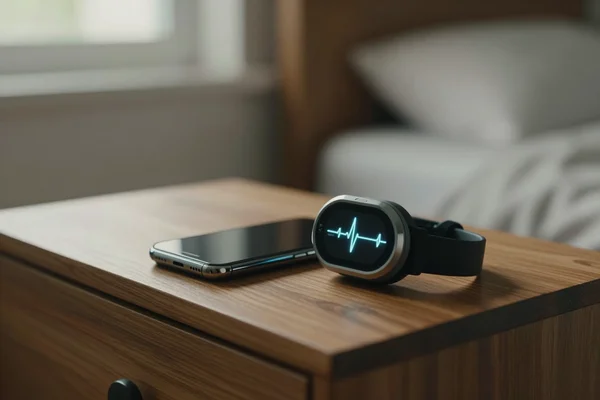
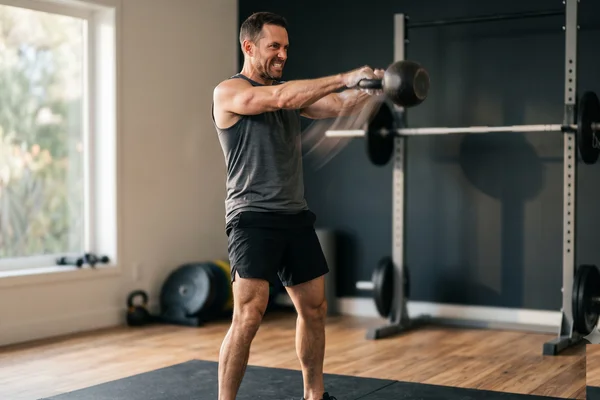
A new wearable aims to track strength training as precisely as Garmin tracks running. Fort, developed by three former Tesla engineers and part of the Y Combinator W26 batch, automatically recognises more than 50 exercises, counts reps, tracks rest times and delivers muscle-specific breakdowns – without manual logging. Sounds like the wearable lifters have been waiting for. But between marketing promises and reality there's often a whole set of reps.
Fort Wearable: Automatic Strength Training Tracking Incl. VBT Data – What's Behind It?
 Christopher Klenk8 min read
At a glance
Fort is a screenless wearable that uses an IMU and a PPG sensor to automatically track strength training – exercises, reps, sets, rest times and muscle-specific load, without manual logging. It also measures rep velocity and estimates proximity to muscular failure. No independent validation so far. Pre-order from 289 USD, shipping from summer 2026. Exciting as a concept, but too early for a verdict.
Stay on top of AI training & analysis? One click — and Google shows you my articles first.
Add as a preferred source on GoogleWhat is Fort?
Fort is a screenless band with an IMU sensor (accelerometer + gyroscope) and a PPG heart sensor (photoplethysmography – optical heart rate measurement via light reflection). According to the manufacturer, the device automatically recognises more than 50 exercises, from barbell compounds to cable accessories, and delivers data on reps, sets, rest times, rep velocity, range of motion and heart rate.
The founders are Zac Valles, Paul and Miranda – all three former Tesla engineers who worked on Cybertruck, Semi and Robotaxi. Fort is part of the Y Combinator W26 batch, which at least implies some due diligence by YC but is not a seal of quality for the sensor technology.
Automatic Exercise Recognition: The Main Feature
Fort wants one thing above all: an end to manual logging. The wearable is supposed to automatically detect more than 50 exercises – from barbell compounds like squats and bench press to cable accessories and isolation exercises. On top of that, it captures reps, sets, rest times and range of motion in real time.
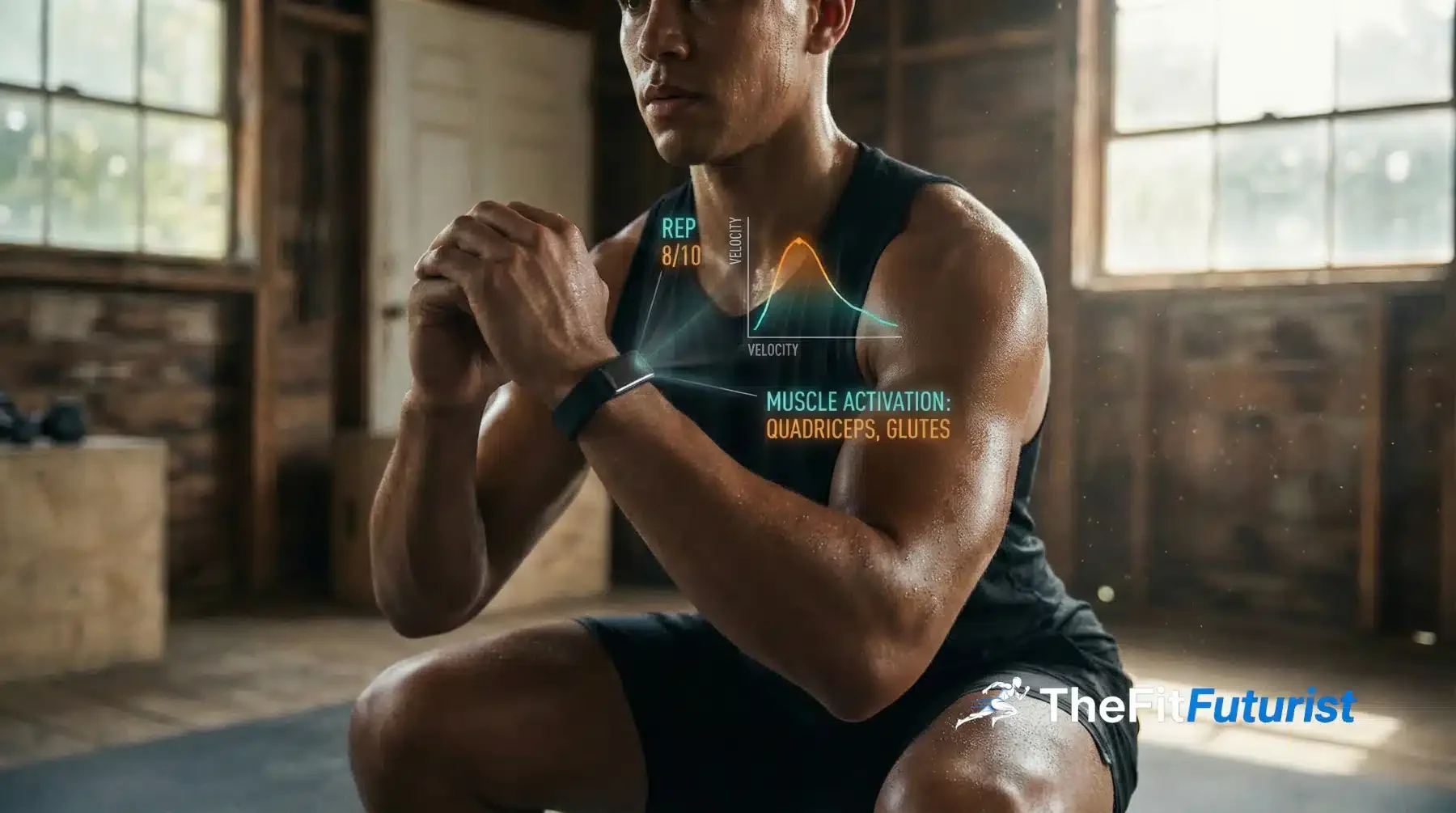
After every session the app delivers a "Session Score" rating training productivity, plus muscle-specific breakdowns: which muscles received a maintenance stimulus, which a growth stimulus, which are overloaded. No other wearable currently delivers that – not a single number, but a structured picture of your training load over time.
The magnetic mounting expands its use case: Fort can be detached from the wrist and attached to weights, grips or body straps. That makes sense, because wrist-based wearables capture many strength exercises poorly – during squats or leg press the wrist barely moves.
Bonus Feature Velocity Tracking: Where It Gets Interesting for VBT Fans
On top of pure exercise recognition, Fort also measures barbell speed rep by rep and derives proximity to failure from it. The principle behind it: velocity-based training (VBT) – a method with a growing evidence base in sport science. Velocity loss per set correlates with muscular fatigue: if speed drops by 20–30 %, you are typically at RPE 8–9. From 40 % velocity loss onward you are approaching muscular failure.
WHAT IS VELOCITY-BASED TRAINING (VBT)?
VBT uses the movement speed of a repetition as an objective measure of intensity and fatigue. Instead of relying on subjective rating of perceived exertion (RPE), you measure how fast the barbell moves. If it slows down, fatigue rises – measurable as velocity loss in percent. Professional systems such as GymAware or PUSH Band measure directly on the barbell; Fort is the first to try doing this continuously from the wrist.
Fort combines the velocity drop with changes in heart rate to estimate fatigue more accurately. That several signals together predict fatigue better than one alone is also shown by a multi-sensor study on fatigue in football. For data-driven lifters this is the most exciting aspect: until now, velocity data per rep was only available with dedicated VBT equipment.
CONTEXT: VELOCITY LOSS AND TRAINING
The evidence for VBT is growing: studies show that 20–30 % velocity loss is optimal for strength gains, while higher values primarily drive hypertrophy at the cost of rising fatigue. How precise such load-velocity profiles for the deadlift have become is shown by recent research. Fort uses this logic – whether the implementation from the wrist is precise enough remains to be proven.
What Fort Tracks on Top
Fort positions itself as a general-purpose wearable with a strength training focus. Alongside the gym metrics it delivers steps, calorie burn, heart rate zones, VO2max estimate, sleep phases (awake, light, deep, REM), a recovery score based on nightly HRV, and real-time stress detection. According to the manufacturer the battery lasts around a week.
That puts Fort in direct competition with Whoop, Oura and Garmin for everyday tracking – with the difference that those manufacturers have years of validation data and an established user base. Fort's strength is supposed to lie exactly where the others fall short: in the weight room.
Critical Assessment: What's Missing
Clear case: Fort has no published scientific validation studies. Zero. The product is based on internal beta testing and the engineering expertise of the team. For comparison: GymAware has years of peer-reviewed validation with ICC values above 0.95 against gold-standard reference systems. Fort has marketing claims and a YC batch. That's a difference.
The most important open question concerns the main feature: how accurately does the IMU sensor recognise exercises in practice? In controlled lab settings IMU-based systems achieve high accuracy (ICC >0.9), but real gym environments with changing grip positions, supersets, atypical movement variants and movement noise are a different game. If automatic recognition misfires on every fifth exercise, the core value – no manual logging – is gone.
Wrist-based velocity measurement is also methodologically demanding. Professional VBT tools like GymAware (load cell, ICC >0.95) measure directly on the barbell. A wrist sensor infers barbell velocity via kinematic conversion – and that typically introduces errors of ±5–10 % on complex compound exercises. On isolation movements or cable work the discrepancy is likely to grow further. That's not a measurement, that's an estimate.
And the muscle-specific breakdowns? They are based on algorithms, not on EMG data (electromyography – the gold standard for measuring muscle activation). Fort estimates muscle stimulus from exercise type, volume and fatigue indicators. Think of it as a data-driven version of RPE – useful for spotting trends over weeks, but not precise enough to tell you whether your lateral deltoid really got a growth stimulus yesterday or just maintenance.
Fort promises what lifters have wanted for years: strength training tracking without manual logging. The open questions are real – but they are solvable, and that's exactly what a beta phase is for.
Pricing and Availability
Fort is available as a pre-order on fort.cx. International shipping including the EU is possible, but customs duties and import VAT may apply – there is no local distributor or EU warehouse yet.
Variant | Price | Included |
|---|---|---|
Pre-Order (Founding Member) | 289 USD | Device + 1 year Premium, beta access, lifetime updates |
Regular price (after launch) | 349 USD + 79.99 USD/year | Free tier available, Premium paid |
Shipping is set to start from Q3 2026, with beta units reportedly already going out since June. The pre-order is fully refundable – a plus for early adopters who don't want to take on risk.
The FitFuturist Angle: Structured Training Data as Raw Material
From TheFitFuturist perspective: Fort could bring structured strength training data to consumer level. Automatically captured sets, reps, rest times and muscle load per session – that's something you can work with in an LLM: tracking training volume across weeks, spotting load patterns, deriving recovery recommendations. And anyone who also gets velocity data per rep can build load-velocity profiles, detect fatigue trends and calculate autoregulation. That VBT produces measurably more volume than tempo training is by now well documented – the question is whether a consumer wearable can deliver that data quality.
That leaves the question: does Fort offer an API or data export? There is no information on that yet. Without an export option your data stays locked inside Fort's app – classic vendor lock-in. No CSV exports, no API for n8n workflows, no way to write your training data into your own database and analyse it with Python. For passive app users that might be enough. For anyone who wants to analyse their own training data, an open API would be a real argument. We're hoping for one – and will test it as soon as it arrives.
Verdict
No established wearable tracks strength training anywhere near as well as endurance – and that is exactly where Fort steps in. Automatic exercise recognition, session scores and muscle-specific breakdowns – Whoop, Oura and Garmin still owe us that in the weight room. The fact that Fort delivers velocity data on top makes it particularly interesting for data-driven lifters.
Yes, independent validation studies are missing, exercise recognition has to prove itself in practice, and without an API data autonomy remains an open point. Still: someone is finally trying to solve the problem. Strength training deserves better data than "calories burned" and a heart rate graph.
If Fort delivers even remotely on what it promises, it would be one of the easiest ways to train in a more data-driven manner – without manual logging, without a separate encoder, without setup before every set. Just strap the band to your wrist, train, and analyse structured training data afterwards.
I'm looking forward to testing Fort myself as soon as devices are available in Europe – comparing exercise recognition, session scores and velocity data against professional tools. Until then: a development I support. Strength training needs better technology, and whoever builds it deserves a fair chance.
Fort is still a promise, not proof. But it's the right promise – automatic strength training tracking that finally takes the weight room seriously.
Sources: fort.cx (product page) | Y Combinator Company Page | YC Launch Post | As of: February 2026. Fort is in pre-order status; all features are based on the manufacturer's information.