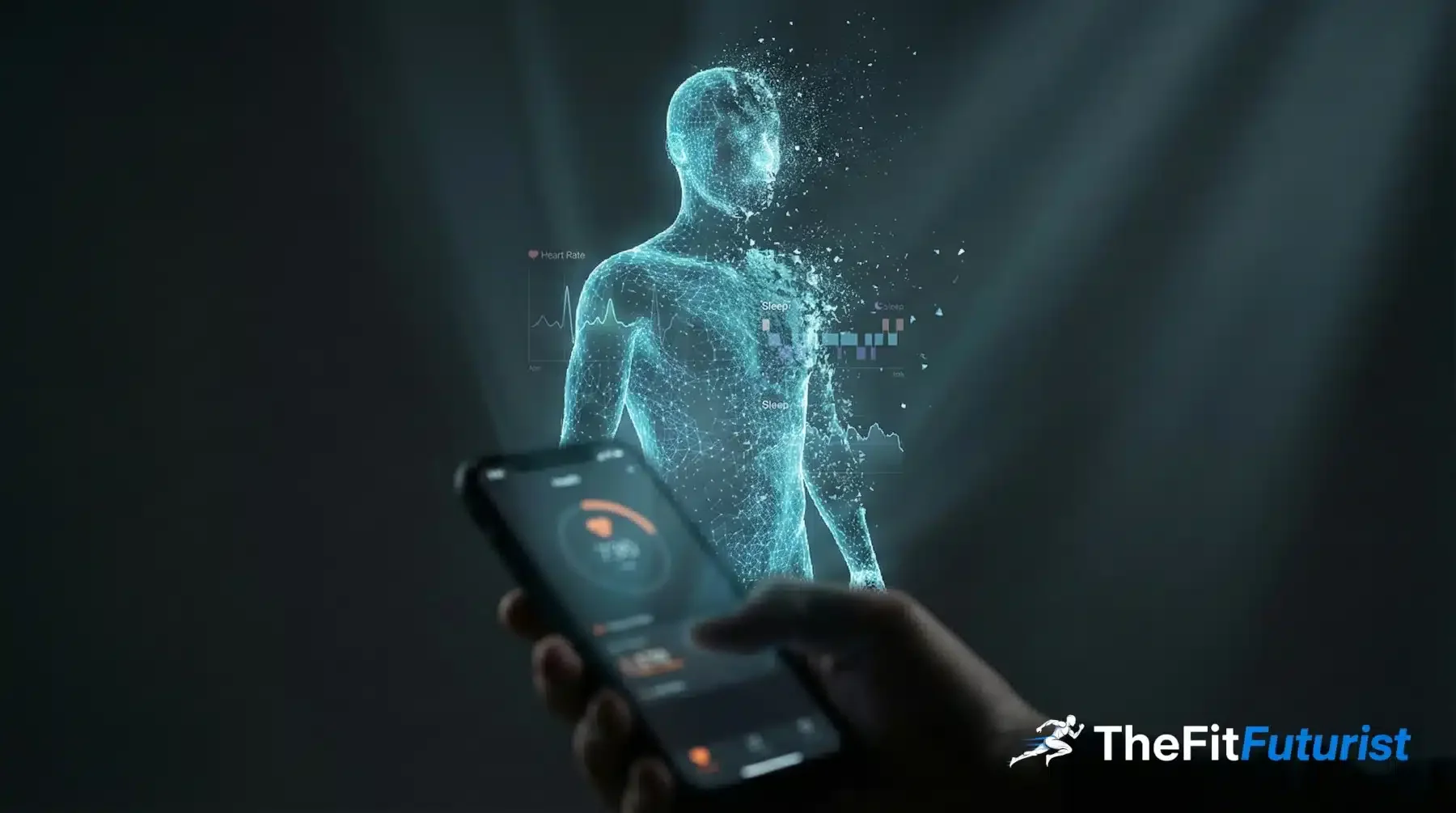
Apple has scaled back its internal project "Mulberry" for an AI-based health coach over recent weeks. The service — internally nicknamed "Health+" by some Apple employees — will not ship as a standalone product. Instead, individual features are set to roll into the existing Health app step by step. That is according to Bloomberg journalist Mark Gurman.
The news sounds like a footnote in Apple's product strategy. In reality, there is a story behind it that should interest anyone who wants to use AI in fitness and health — or is waiting for a tech company to take that off their hands.
1. What was Project Mulberry?
Project Mulberry was one of the bigger health projects in Apple's pipeline. The plan: an AI-powered coach, for which Apple had hired doctors, sleep experts, nutritionists, physiotherapists, cardiologists and mental health specialists — among other things for educational video content. Apple had also set up its own studio in Oakland, California to produce this content — including the search for a well-known medical personality as the service's "host".
Specifically, the coach was supposed to combine user data from iPhone and Apple Watch with questionnaires to deliver personalised lifestyle recommendations. The iPhone camera was meant to run gait analyses and correct workout form. Sounds like a lot of substance — and probably was. But "a lot of substance" was not enough.
2. Why Apple pulled the plug
According to Gurman's sources, the core reasoning can be summed up in a single sentence: Eddy Cue did not consider the product competitive enough. Apple itself has not commented publicly. But behind Cue's assessment lie several concrete factors that combined to produce this outcome.
2.1 Leadership chaos at the wrong moment
Apple's health division has lost two key figures within a few months. COO Jeff Williams — the long-standing patron of the Health division — retired at the end of 2025. Shortly after, John Giannandrea announced his departure, Apple's Senior Vice President for Machine Learning and AI Strategy. His organisation was folded into Craig Federighi's software engineering group. The health and fitness teams ended up under services chief Eddy Cue — a subscription-business veteran who, according to Gurman's sources, critically reviewed the existing plans after taking over the area.
2.2 The competition moved faster
According to the Bloomberg sources, the comparison with the competition was sobering: Oura and Whoop already deliver much of what Apple was still planning. Oura has had the "Oura Advisor" in the field since March 2025 — an AI-powered health coach that combines LLMs with biometric data. 60% of beta users used the feature several times per week. Whoop offers a similar function with the "Whoop Coach" (based on ChatGPT). Both products exist, work, and have built an active user base — while Apple was still filming videos.
Context: What Oura and Whoop do differently
Oura Advisor and Whoop Coach are not classic rule-based systems. They actually use LLMs that can access the user's biometric data — sleep stages, HRV trends, stress values, activity levels. The difference from a generic ChatGPT prompt: the models have context on your physiological data. That is a meaningful advantage over a chatbot you have to describe your data to manually.
2.3 The liability problem
One aspect Bloomberg's reporting does not go deeper on, but which is relevant for context: an AI health coach marketed as a standalone product moves on thin regulatory ice. In the EU, the AI Act classifies many AI systems in the health and diagnostic space as high-risk systems — depending on the specific function and area of use. In the US, FDA classification is more diffuse — in early January 2026 the agency did relax the regulation of low-risk wellness software, but an actively advising AI coach is likely to go well beyond wellness tracking. What the relaxation means for wearables like Oura is in my take on the FDA, Oura and wellness wearables.
Who is liable if the AI coach misses a critical health condition? Or if a recommendation causes harm? Those questions are legally unresolved. For Apple — a company that builds its brand on trust and quality — a faulty health advisor is an enormous reputational risk. Quietly scaling the project back is the rational call.
2.4 Apple's AI problem is bigger than Health+
Apple Intelligence has so far failed to meet many observers' expectations. According to numerous tech outlets, Siri still lags behind the capabilities of ChatGPT, Claude and Gemini. Several announced AI features have been delayed, and a revamped Siri chatbot is still pending. If the base AI infrastructure does not convince, a health coach built on top of it becomes a challenge. From that angle, Mulberry was not just a health project — it also reflects broader difficulties with Apple's AI strategy.
3. What remains?
Apple is not throwing everything away. According to Bloomberg, individual Mulberry features will be integrated into the Health app step by step. Specifically planned are the health videos produced in Oakland, which are meant to explain medical relationships, data-driven recommendations based on Apple Watch and iPhone data, a standalone AI chatbot for health questions — based on an internal system called "World Knowledge Answers" — and camera-based gait analysis via the iPhone.
According to Bloomberg, Apple is also working on using the revamped Siri chatbot for more complex health queries inside the Health app in the future. When exactly that lands is unclear — Apple's track record on AI announcements has not been convincing lately.
4. What this means for your own AI use
The Mulberry story confirms a thesis central to TheFitFuturist: anyone waiting for a tech company to build the perfect AI health coach may be waiting a very long time. Even Apple — with enormous resources, its own hardware, its own ecosystem and access to millions of user data points — has so far been unable to put together an overall package that convinced its own leadership.
The best AI health coach is not a product you buy. It is a skill you build.
That sounds uncomfortable, but the logic is simple: a prefab AI coach has to work for millions of users — from couch potato to ultramarathon runner. It has to stay within regulatory limits, minimise liability risk, and still give concrete advice. These requirements fundamentally contradict each other. The result is either generic recommendations that get no one anywhere, or a product that never ships.
If you instead use ChatGPT or Claude directly, you are in control of the context. You decide which data you share, which questions you ask and how specific you get. That does require that you can ask the right questions — and that is exactly where the prompt paradox kicks in. Without some grounding in sport science you ask the wrong things and still get a confident answer.
The uncomfortable truth
According to Gurman's sources, Eddy Cue rated the planned AI coach as not competitive against Oura and Whoop. At the same time, Oura and Whoop use the same LLMs (GPT, etc.) you can use yourself — just with better automatic data access to your biometrics. The real gap is not the AI, but the connection between your data and your knowledge. No product can close that for you.
5. Assessment: What comes next?
In 2025 the wearable industry set a clear direction: away from pure data collection, towards AI-powered interpretation. Oura, Whoop, Garmin (with Connect+) and Ultrahuman are investing heavily in software features that contextualise data. Apple will not ignore this trend — but the approach will be incremental rather than monolithic.
For the Health app, that means: more individual AI features spread across the next iOS versions. A standalone, coherent AI health coach from Apple looks unlikely from today's vantage point after the end of Mulberry.
For everyone who wants to use AI for their health and training right now, the path stays the same: understand your own data, write good prompts, critically review results. No product will do that for you — not even one from Apple.
Sources: Bloomberg (Mark Gurman, 5 February 2026), 9to5Mac, Engadget, PYMNTS. Apple's internal "Mulberry" project was never officially announced. All information is based on reports from people familiar with the matter.