Runners run. Gym-goers bench. Many people train what they are good at, not necessarily where they are weakest. Chinese researchers have presented a machine learning model in Scientific Reports that derives a training plan from four fitness tests. With real data and a randomised trial, but also with a few gaps you should know about. And without any AI chatbot.
Study Check: No AI Chatbot, Just Tests and Machine Learning for Your Training Plan
 Christopher Klenk6 min read
At a glance
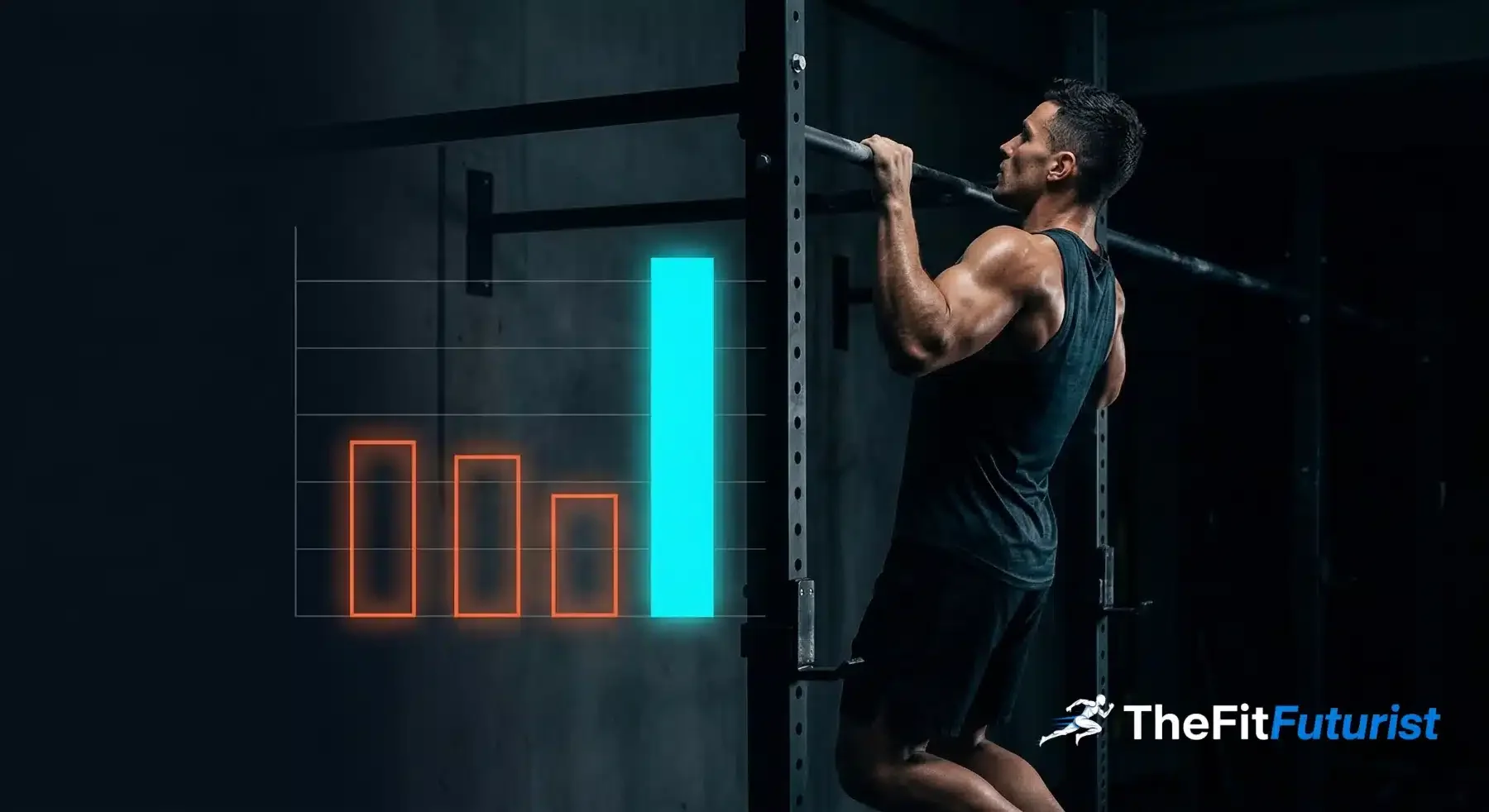
Chinese researchers built a model that predicts BMI category from four fitness tests and shows which test value carries the most weight. A fixed set of rules then shapes the training plan around it. In a trial with 1,160 participants, the group with the model-based plan did better than the control group, for example with 3.1 more pull-ups. But: it also trained a lot more and got a nutrition plan on top. Whether targeting the weak spot itself makes the difference, the study does not show.
Stay on top of AI training & analysis? One click — and Google shows you my articles first.
Add as a preferred source on GoogleThe idea behind it is simpler than it sounds
You do four tests: a 3,000 m run, pull-ups, sit-ups in 60 seconds and a short sprint shuttle. The values go into a machine learning model trained on the test data of 6,698 students. It predicts your BMI category and shows which of your test values is most strongly linked to a higher BMI. That area then gets priority in the plan.
For this the researchers use SHAP, a method that shows how strongly each measurement influenced a prediction. The model might then say: your pull-up count contributed most. Across all participants, though, pull-ups (0.18), the 3,000 m run (0.15) and the shuttle (0.12) were close together. That value steers how the plan is put together. Low strength means more strength training, weak endurance means more HIIT and endurance sessions.
For those who want the details: what the model actually does
Technically, a 1D CNN with multi-head attention prepares the data, followed by a LightGBM classifier. The CNN processes the 15 split times of the 3,000 m run as a time series, the other three tests are simply duplicated to fit the format. The 94.5% hit rate refers to the BMI categories. The step that turns this into a training plan is rule-based according to the paper, so no further machine learning.
A specialised model, not a chatbot
Before anyone asks: technically, this has nothing to do with a chatbot. No ChatGPT, no Claude, no prompt. The researchers trained a specialised model on real measurement data, and that difference matters in practice.
Imagine you ask ChatGPT: "I do 8 pull-ups, run 3,000 metres in 14 minutes and manage 32 sit-ups in 60 seconds. Where is my biggest weakness?" ChatGPT gives you an answer, even a plausible one. But it rests on texts the model read at some point: articles, forums, books about training. It does not know how your 14 minutes compare with thousands of other people of similar body weight.
The model from this study, by contrast, learned from 6,698 real test profiles which combination of run time, pull-ups, sit-ups and shuttle time goes with which weight category. When you enter your four test values, you get a prediction that follows from measured data. An example case from the paper shows what that looks like: the pull-up count contributed most to the overweight classification at +0.21, while the shuttle run pulled the other way at −0.08.
An AI chatbot can explain what a plan should look like if you lack strength. This model shows you which of your values is most strongly linked to being overweight. Whether that is a real strength deficit, you have to judge yourself.
What the trial shows and where it has gaps
1,160 participants, 12 weeks, two groups: one got the training plan created by the model, the other followed its usual programme. Compared with the control group, the first group managed 3.1 more pull-ups on average, was 0.9 minutes (54 seconds) faster over 3,000 metres and 2 seconds faster in the shuttle. So something did happen.
I checked what else was different, and that is where it gets thin. The intervention group trained at least 300 minutes a week with HIIT, endurance and strength work, the control group only its usual programme. On top of that, the intervention group got a nutrition plan with calorie and macro targets, and it is not accounted for in the results. Participants and coaches also knew which group they were in. How much the model-based plan itself contributed cannot be said cleanly. According to the paper, the share of overweight participants fell by 23.5%. How exactly that was calculated and how the control group fared, it does not say.
Two more points you should know
The model was developed only on 18- to 20-year-old men from one institution, an aviation technical college in Changsha. The trial participants came from the same school. Women, older adults and competitive athletes are not included. On top of that, the model predicts BMI categories, not body fat or muscle mass. Anyone with a lot of muscle quickly counts as overweight by BMI, and the model cannot tell the difference. Also, some percentages in the paper do not match its own tables, for example for pull-ups. So I stuck to the tables.
How to test the idea yourself
You cannot download the model from the study, the data and code are not public. You can try the basic idea today, though. My reading: the study shows that a package of more training, a nutrition plan and model-based steering works better than the usual programme. Whether targeting your own weak spot makes the difference by itself remains a hypothesis. From my years as a coach, I find it plausible.
Three ways to use this today
Simple: Do the four tests yourself and feed the values into a chatbot prompt, for example: "I do 8 pull-ups, run 3,000 metres in 14:30, manage 28 sit-ups in 60 seconds and 32 seconds in the 30×2 shuttle. Which is my biggest weakness compared to a fit athlete of my age, and how should I train for the next 4 weeks?" Whether this works as well without a specialised model has not been tested. I would still try it this way.
Better: Use your wearable data (HRV, training load, VO₂max estimate) as input instead of four individual tests. More data points can improve the prioritisation, but that has not been tested either.
For tech enthusiasts: Train your own small model on your training data from the last few years. Doable in Python, and then actually tailored to you rather than to data from students at one college.
What I find exciting is the combination: a specialised model for the diagnosis and a chatbot for the plan. All the building blocks exist today. Whether the combination is any good, nobody has tested yet.
The same applies here as with any prompt: anyone who knows what distinguishes endurance, maximal strength and anaerobic capacity gets a usable prioritisation from the chatbot and can build their own training plan with ChatGPT, Gemini or Claude. Anyone who does not know that gets a confidently worded answer they cannot judge.
Source: Mo M. et al. A machine learning framework for personalized exercise prescription based on BMI and physical fitness assessment. Scientific Reports (2026). DOI: 10.1038/s41598-026-42405-2