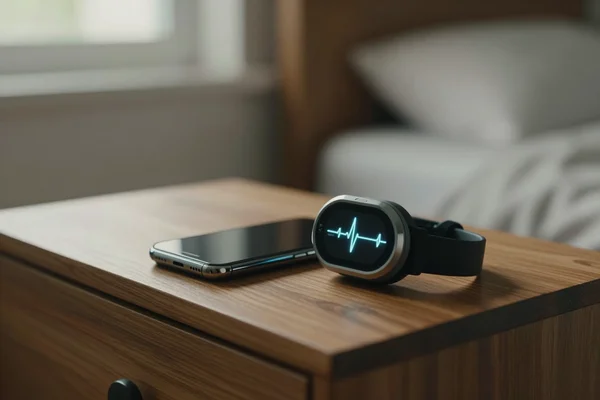
On 6 January 2026 the US Food and Drug Administration (FDA) revised its guidance "General Wellness: Policy for Low Risk Devices". Wearables like the Oura Ring, Apple Watch or devices from Garmin and Polar can now show more values without counting as medical devices. Oura is celebrating it as a breakthrough. My reading: the change does more for the industry than for consumers. And the measurement technology behind it is less accurate than the marketing suggests.
FDA eases its wellness guidance for wearables: Oura's role and how accurate the sensors are
 Christopher Klenk9 min read
At a glance
The FDA revised its non-binding wellness guidance. Wearables may estimate values like blood pressure or blood sugar with a light sensor, as long as the values are validated and no diagnosis is promised. Sensors that pierce the skin remain medical devices. Oura lobbied for an easing, and according to Politico its lobbying budget grew from 40,000 to over one million dollars. Whether that tipped the scales, I cannot prove. More important for your training: PPG technology has real limits, and your morning resting heart rate is an underrated, simple value next to any recovery score.
Stay on top of AI training & analysis? One click — and Google shows you my articles first.
Add as a preferred source on Google1. What the FDA actually changed
First, because this often gets lost: this is not a law and not a new rule. The FDA revised a guidance document that describes where it does not intend to step in. It is not binding, neither for the agency nor for manufacturers. The definition of a wellness product already existed. What is new is a section on sensors that measure without entering the body, and it affects three areas.
Blood pressure: Wearables that only estimate blood pressure without a cuff, for example via photoplethysmography (PPG, i.e. light measurement at the skin), can count as wellness products. The conditions: they do not diagnose a disease such as hypertension, and the values they show must be validated. Anyone displaying blood pressure numbers has to be able to show they are accurate. As recently as 2025 the FDA had explicitly warned against such estimates.
Glucose: Blood sugar estimates that do not pierce the skin can also fall into the wellness category, as long as they are meant only for nutrition, fitness and well-being in healthy people. Fingerstick devices and CGM sensors remain medical devices. Even a microneedle sensor intended only for healthy people does not qualify according to the FDA, because it penetrates the outer layer of skin.
Notifications and alerts: Wellness devices are allowed to indicate when a doctor's visit might make sense. But: they must not name specific diseases, state diagnostic thresholds, recommend treatment, or offer continuous monitoring of chronic conditions.
On paper this sounds like a sensible middle ground. In practice it shifts the line between wellness gadget and medical device, and the manufacturers pushed hard for that shift.
2. Oura's lobbying: from 40,000 to over one million dollars
Oura did more than welcome the change, it actively worked towards it. In December 2025 CEO Tom Hale called for a new category of "Digital Health Screeners" between wellness product and medical device in an op-ed in the Wall Street Journal. According to Politico, the lobbying budget grew from 40,000 dollars (2024) to over one million dollars (2025). According to Oura, the US Department of Defense is its largest enterprise customer. Whether the lobbying caused the guidance, I cannot prove. I do not think it is a coincidence, though.
Oura is not alone. My guess: Apple could benefit too. Then again, Apple just had its hypertension notifications for the Apple Watch cleared by the FDA as a medical device in September 2025, and there is no glucose feature. WHOOP manager Alex Vannoni urged caution about Oura's proposal for a new, "unregulated and undefined category". WHOOP itself, however, welcomed the FDA guidance.
CONTEXT: WHOOP AS A CAUTIONARY TALE
In July 2025 the FDA sent WHOOP a Warning Letter over "Blood Pressure Insights", a feature that shows blood pressure values estimated by its optical sensor, without clearance as a medical device. WHOOP still considers the feature a wellness function, and according to STAT the dispute was unresolved in May 2026. The difference between "helps you live healthier" and "detects high blood pressure" is decisive for regulators and often just a matter of marketing copy.
3. How accurate are wearables?
For your training, regulation matters less than how well the sensors measure. And the limits of PPG technology affect practically every wearable on the market.
3.1 PPG vs. ECG: physics cannot be marketed away
Heart rate variability (HRV) is based on the precise time difference between individual heartbeats, the so-called inter-beat intervals (IBI). An ECG detects the electrical R-peaks of the heart directly and very accurately. PPG sensors (photoplethysmography), as used in rings, watches, and bands, by contrast measure indirectly via light reflection at the skin. That makes them susceptible to movement, sweat, circulation fluctuations, and poor skin contact.
Under controlled conditions, especially during sleep, PPG wearables reach very high agreement with ECG for rMSSD (a common HRV measure). For Oura, Kinnunen et al. (2020) showed this for overnight measurements. The caveat matters, though: this holds at rest, with cleaned data and averaged over longer windows. For 5-minute values the agreement is already noticeably worse, and during movement or for frequency values like LF/HF it gets really unreliable.
3.2 ECG is not flawless either
HRV is sensitive even with ECG and a chest strap. Small movement artefacts already distort the calculation, whether the data comes from a chest strap or a wearable. Extrasystoles (extra heartbeats) have to be detected and corrected, otherwise values like rMSSD get systematically skewed. Careful studies therefore measure HRV at rest, in a fixed position and with dedicated software that cleans the data.
What that means to me: HRV reacts to small things, whatever technology you use. PPG wearables add optical sources of error on top. Single readings outside of resting conditions are therefore of little use.
4. Recovery scores: how much is marketing, how much is substance?
Garmin Body Battery, WHOOP Recovery, Oura Readiness, Fitbit Daily Readiness: all the major manufacturers sell their own composite scores that boil HRV, resting heart rate, sleep and activity down to a single number. The problem: no manufacturer discloses exactly how these scores are calculated. And the validation picture is thin.
Doherty et al. (2025) took apart 14 such scores from 10 manufacturers based on the manufacturers' own documentation: none discloses its formula, and hardly any has solid validation. Spetz et al. (2025) followed 20 elite endurance athletes for a year. The links between wearable data and self-reported ratings were moderate to strong, but varied a lot from athlete to athlete. Their conclusion: subjective ratings belong in the picture. My experience: if you wear several devices at once, they often show different recovery values. To me that points to black boxes rather than robust science.
My estimate from practice, with no study behind it: part of these scores rests on solid data, part is estimated and extrapolated, and part is mainly there to keep you in the manufacturer's ecosystem.
5. The underrated metric: your resting heart rate
Next to all the HRV analytics and AI scores, one of the oldest values in sports medicine tends to get overlooked: morning resting heart rate. It is easy to measure and more robust than many people think.
A consistently low resting heart rate points to good cardiovascular adaptation. If your resting heart rate sits clearly above your normal value for several days, take a closer look: it can point to fatigue, stress or an oncoming infection. A single day with five extra beats, however, can simply be normal fluctuation.
Buchheit (2014) shows in his widely cited review on training monitoring that the advantage of HRV over simple heart rate is smaller than often claimed. For day-to-day decisions he still recommends resting HRV in the morning. My reading: look at resting heart rate and HRV together, averaged over several days. Resting heart rate is not obsolete, it is a simple and often robust part of the overall picture.
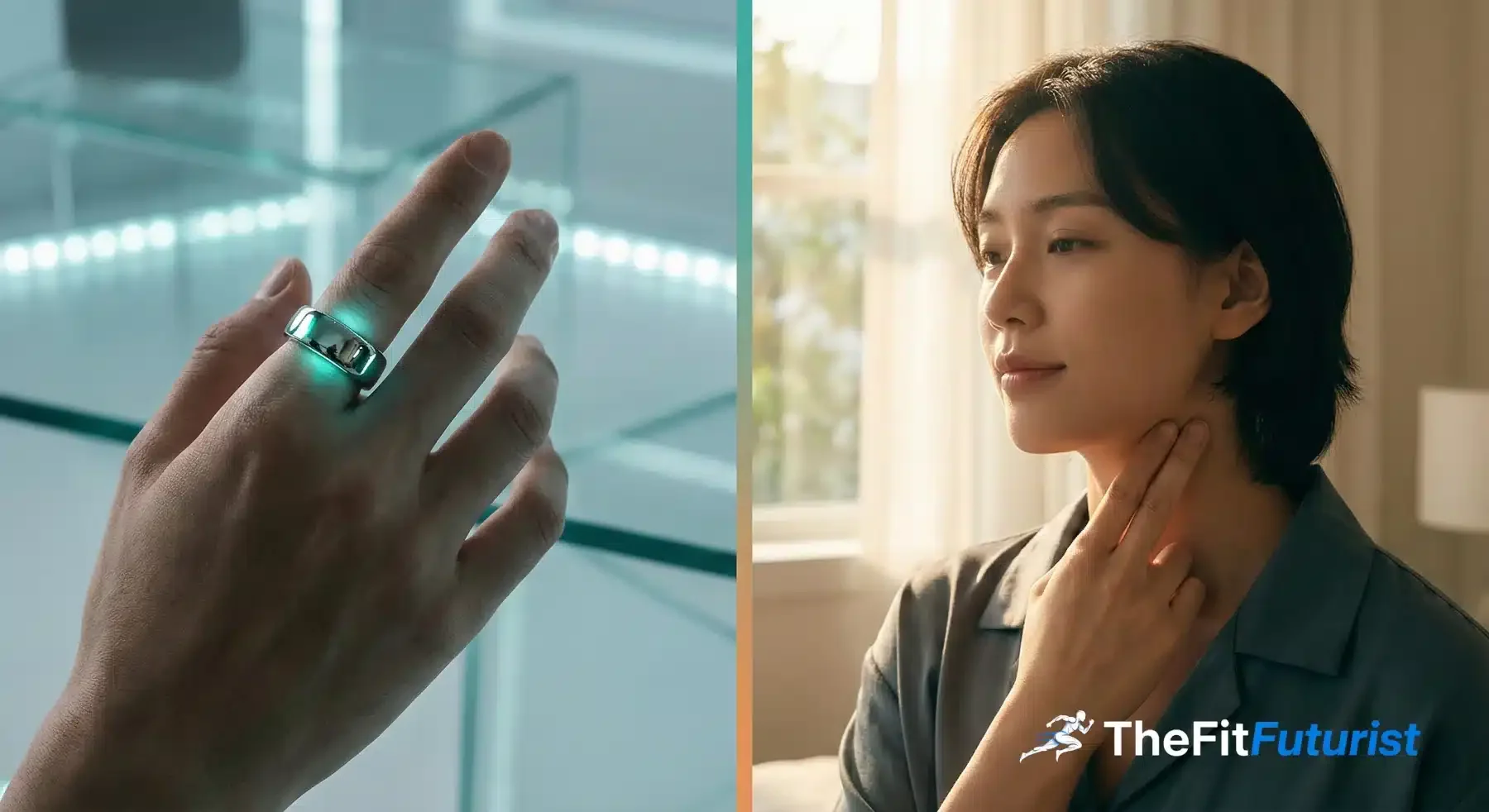
My tip: your finger on your neck at 6 a.m., or simply the resting heart rate on your watch, gives you a data point you can understand without a black box.
6. What is positive about the FDA change?
For all the scepticism, the guidance also has good sides. It draws the line more precisely than the 2019 version. Manufacturers know better what they may do: wellness products must not name diseases, state diagnostic thresholds or recommend treatment. That can rather curb misleading marketing claims.
For users this can mean more features without manufacturers waiting years for clearance. Blood pressure trends, metabolic tracking and personalised notifications could arrive sooner. Oura stresses that it will keep relying on third-party validation. I think that is good, as long as it does not stay PR.
Whether the new clarity makes manufacturers like WHOOP communicate more carefully is open. WHOOP sees the guidance as backing its position, and the dispute over Blood Pressure Insights was still unresolved in May 2026. My take: the guidance is no invitation to the Wild West. Critics already see more and more blood pressure wearables coming onto the market, though.
7. Verdict: more features, more personal responsibility
The FDA change is real, and Oura actively pushed for it. That is neither a scandal nor a surprise, it is how industrial policy has worked for decades. What matters is what you make of it.
New features like blood pressure estimation and glucose tracking will come. They can give useful orientation, as long as you take them for what they are: estimates from an optical sensor, not diagnoses. PPG technology has physical limits that no algorithm can fully compute away.
This is how I would handle it: use wearable data as one building block among several. Watch trends over weeks rather than single readings. Take your morning resting heart rate seriously, it is simple, free and underrated. And if the recovery score looks great but you feel completely wiped out, trust your body.
In the end it is more complicated than a number on your wrist.
Sources: Oura Blog: How New FDA Guidance Unlocks Innovation at Oura (10/02/2026) · FDA: General Wellness: Policy for Low Risk Devices (06/01/2026) · FDA: Warning Letter to WHOOP Inc. (14/07/2025) · AppleInsider: Oura's FDA lobbying benefits Apple Watch (09/02/2026) · MedTech Dive: FDA exempts more wearable, AI features from oversight (08/01/2026) · MD+DI Online: FDA's New Rules for Wearables (08/01/2026) · STAT: Whoop has not resolved FDA dispute over blood pressure feature (21/05/2026) · Buchheit, M. (2014): Monitoring training status with HR measures: do all roads lead to Rome? Front Physiol, 5:73, PMC3936188 · Kinnunen, H. et al. (2020): Feasible assessment of recovery and cardiovascular health: accuracy of nocturnal HR and HRV assessed via ring PPG in comparison to medical grade ECG. Physiol Meas, 41(4), DOI · Altini, M. & Kinnunen, H. (2021): The Promise of Sleep: A Multi-Sensor Approach for Accurate Sleep Stage Detection. Sensors, 21(13). · de Zambotti, M. et al. (2019): The Sleep of the Ring: Comparison of the ŌURA Sleep Tracker Against Polysomnography. Behav Sleep Med, 17(2). · Spetz, L. et al. (2025): Validating Subjective Ratings with Wearable Data. Sports Med Open, 11:154, PMC12696214 · Doherty, C. et al. (2025): Readiness, recovery, and strain: evaluation of composite health scores. Translational Exercise Biomedicine, DOI.